Friday, May 15, 2026

Play Longer Works by Women Composers

I agree with oboist Kathleen Needleman's Substack May 13, 2026. As a freelance music critic, I’ve lobbied for the performance of longer works by women composers for years. 

In a review of a work by Gabriela Lena Frank, who won a Pulitzer Prize this year,  I wrote, “It was wonderful to hear a long (30-minute) work by a living woman composer of diverse heritage. So often, music directors will toss this demographic a musical bone by performing an overture-type composition in five minutes or so. This work reminded me of Bartók’s Concerto for Orchestra for its bold expression, complexity, and passion for the music of Indigenous cultures.” (BroadStreetReview.com  May 16, 2023.)

Friday, March 17, 2023

Invictus by L.L. Holt (Harvard Square Editions, 2019) was named a Finalist in the international Next Generation Indie Book Awards for 2021. Also known as the Indie Book Awards, the literary awards program recognizes and honors authors and publishers of exceptional independently published books in 70 different categories.

Holt's novel builds on the long-persisting legend that the composer Ludwig van Beethoven may have been, or been treated and discriminated against as, a person of color during his lifetime (1770-1827) 

The book is the prelude to The Black Spaniard by L.L. Holt (Unsolicited Press, 2016), a novel in which Beethoven breaks away, faces adversity, and challenges Fate.

Award recognition is nothing new to this author. She has been mesmerized by Beethoven's music and life story since her childhood. Earlier, The Black Spaniard was short-listed for the GOETHE Book Awards for Historic post-1750s Fiction, a division of the Chanticleer International Book Awards. Invictus was also a Finalist for the Landmark Prize for Fiction when it was still in manuscript form (under the title, Intensia).

Holt's award is in an exciting new category designated for books that deal with issues experienced by Black, Indigenous, People of Color (BIPOC). She is currently contemplating writing a third and final novel about Beethoven as well as a fictional reimagining of the swashbuckling life story of the Chevalier de Saint-Georges, a prominent composer and swordsman during the French Revolution.

Invictus                           Beethoven age: 0-16    Order here:        tinyurl.com/bdch9drp  

The Black Spaniard       Beethoven age: 21-33   Order here:        https://tinyurl.com/5n79nact


Tuesday, March 14, 2023

Kairy Koshoeva's Piano Wizardry

 Musician profile featured the Broad Street Review (Philadelphia) March 16, 2023, edition:

http://bit.ly/42hWhSX

Photo by E.G. Schempf

Tuesday, March 7, 2023

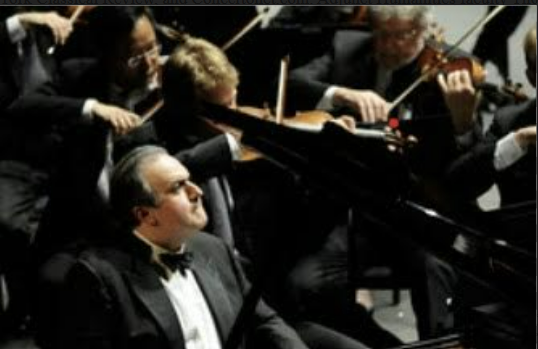
Bronfman Shines in Firsova U.S. Premiere

  http://bit.ly/3Y5vqWP

Review in Broad Street Review (Philadelphia, PA) March 2023.


                                                                Yefim Bronfman, pianist

Beethoven without a Pulse :-(


https://concertonet.com/scripts/cd.php?ID_cd=4941  

Excruciatingly slow and oddly pointless. Can this still be Beethoven? Review in ConcertoNet.com

Friday, November 4, 2022

L.L. Holt interviewed on the Win-Win Show, Nov. 2, 2022

Here is a link to this lively, laugh-filled interview program conducted weekly on the Internet by Win Derman. Alternatively, search for FeelItLive, the Win-Win Show, Episode 55 with Dr. Linda Holt :

https://virtualvenue.feelitlive.com/fa8bac77-5d4b-445c-bcbc-d44f094bbc50


Wednesday, May 19, 2021

Playing the Piano with Great Pianists

No, I don't mean taking a masterclass. Or necessarily following the piano guy on PBS. What I mean is experiencing great music intensely by playing along with a recording of a great performance, even if you can only play a few scales and basic chords and can read music enough to sing in a choir.

I had a bit of piano in college, but despite an attraction (one could say obsession) that dates back to early childhood, I never officially learned how to play. I do in my dreams sometimes. Pretty often, in fact. 
 
And lately, when I listen to great performances of Beethoven, the desire to run to the piano is almost irresistible. I wrote about this six months ago in a review of a recital by Jonathan Biss in Philadelphia. Why, I asked, don't more people run to the piano when they hear great music at home and bang out simple chords and the shapes of melodies? It's not hard to do.
 
While the pianist in the recording plays chords with 8 accidental-laced notes and 32nd note triplets in the upper range, why don't you trace some of the key notes on your own keyboard? You don't have to be perfect or even in tune. Just LET GO. Letting go is what makes the difference between tepid music heard at a distance and a heart-stirring musical experience that you can share with the artist of your choice.
 
I agree it's hard to get started. You do need to know a few pedagogical basics. And you have to stop worrying about what other people will think. Fear of people hearing us practice is the main reason adults do not touch their pianos, which are a hot link to the experience of feeling music intensely. This is for you, not a performance for others.

I have been thinking about this since the Biss concert, and tonight the impulse was overwhelming. Beethoven's Arietta, the second and last movement of his last piano sonata, had been raging in my head for days. I finally pushed back the key cover, sat down on the bench beside my laptop, and let the recording begin. After a couple of rough starts, I discovered the main notes (all in C major, thank goodness) and soon was weaving a simple echo to the pianist's masterful performance. I forgot about the neighbors, the open windows, the time. I was surrounded by music and felt I was part of the creative process. I was afloat on a sea of feeling such as I never experienced in a concert hall. It was ridiculously imperfect, but who cares? I was the only one listening and, believe me, it was the real thing.
 
(Alternative cover to Invictus by L.L.Holt, a novel about young Beethoven's discovery of music.


Thursday, February 25, 2021

A tribute to Beethoven by concert pianist Hao Huang

Pianist Hao Huang celebrates Beethoven in this performance of the piano sonata Op. 109 (slightly edited for time constraints). Thank you, Hao Huang, for this moving interpretation.


https://www.youtube.com/watch?v=arAKdYmlKsg&feature=youtu.be
Beethoven Op. 109. Gesangvoll, mit innigster Empfindung. Andante molto cantabile ed espressivoPerformed By:Hao Huang Bessie and Cecil Frankel Chair in MusicS...


Tuesday, December 29, 2020

Linda Holt provides insights into contemporary Chinese music in new Beijing documentary

There is no doubt about it: the future of Western classical music is closely linked to the growth and great success of "art music" in China and other Asian countries.

This topic is discussed in an exciting new video produced by the Central Conservatory of Music in Beijing. I was privileged to discuss my own views on this revolutionary culture shift from counter 16:40 to 22:00 on this video, which appears on YouTube, Facebook, and the Violin Channel. Please share with your friends and colleagues interested in all forms of music as well as Chinese culture and practices.

https://www.youtube.com/watch?v=mv2zjKS6IYk

https://www.facebook.com/theviolinchannel/videos/2811575689090788


Monday, November 9, 2020

My review in Backtrack.com this week: Tabita Berglund conducted works by Sibelius and Beethoven in a concert of the Royal Scottish National Orchestra, November 6, 2020. Boris Giltburg performed the Beethoven Third Piano Concerto and, as an encore, dazzled with the final movement of Beethoven's Sonata No. 30. Review link follows:

Masterful direction: Tabita Berglund conducts the RSNO in Beethoven and Sibelius


Saturday, October 31, 2020

I Sing Silicon Valley Medley; Picasso Celebration Favorites

Here are two separate recordings I reviewed recently for ConcertoNet.com : "Here I Stand" with I Sing Silicon Valley (choir) and Les Musiques de Picasso:

I Sing Silicon Valley:  https://concertonet.com/scripts/cd.php?ID_cd=4604

Les Musiques de Picasso:  https://concertonet.com/scripts/cd.php?ID_cd=4593


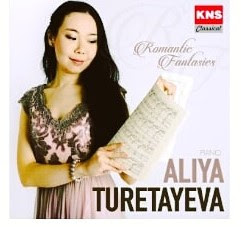
Bruckner's E Minor Mass, Aliya Turetayeva's Debut

Here are links to my recent reviews for ConcertoNet.com of two separate CDs :Bruckner's E Minor Mass and Motets, and Aliya Turetayeva's debut album of Schumann favorites:

https://concertonet.com/scripts/cd.php?ID_cd=4614

https://concertonet.com/scripts/cd.php?ID_cd=4616


Monday, August 17, 2020

The Bargain (a poem in honor of the 250th anniversary of Beethoven's birth)


The Bargain


The pianist sat worried at the keys.

It was that moment when the sun emerges from the night.

Or was it dusk, and had the sun just set?

I forget.


Whatever time it was, whatever day,

The man, not a religious sort,

Began to pray.


“I have no music,” was the young man’s cry.

I have no songs to give. Lord, say

The word, unloose what’s pent up in my heart.

I’ll change my ways, live only for my art.


“How I regret my misspent days.

Let my soul sing again, and You

Alone will be the object of my endless praise.”


Prayers from these swaggering self-centered fools,

Who usually God deny, intrigue the Deity.

And so He stopped the sun’s descent (or rise)

And brushed His hand across the pianist’s eyes.


It was a spell,

And so it fell upon the sad man’s soul.

Near blinded by the Light

That sat beside him on the quilted bench,

He blinked, too stunned to gasp.

Every finger in his fists unclenched, unclasped.


The pianist saw no form or face,

But heard resounding in his bones

An unmistakable deep voice the words intone:

“Be silent. Listen carefully to what I say.

I have a deal to make with you today.”


Tears welled in the young man’s eyes.

Who would have thought that prayers

So easy and immediately could yield

Spectacular results like these. 

“I'll go church more often,” he briefly mused,

“And not make fun of nuns and rosaries.”


“What is this deal?” the musician asked,

“Will I compose again? Will thousands thrill

To bagatelles and variations without end,

To fugues, and trills, and lilting rounds, and

Choruses and songs? Will my creative power,

once-inexhaustible, return ere long?


“You shall, it will,” the Master said,

“if you agree to terms I offer you

So light and free. All I will restore to you

And more, if you make one small sacrifice

For me.


“I’ll give you all the music that Heaven can embrace.

I’ll yield the murmurs of My Heart,

The swirling stars in space.

The wing beat of a hummingbird

The crimson of the dawn, the lion’s roar,

I’ll fill your soul with sound that never has been heard before.”


The young man was transfigured,

He almost would have glowed,

Except the thought of one small thing,

Unknown, his ardor slowed.


“That all sounds quite enticing,” he said

With some control. “But I can’t help feeling

The price will weigh too heavy on my soul.”


The Light dimmed briefly, then flared bright.

“There is a cost,” He said. “I’ll give you all my music.

But your hearing take instead.”


“My hearing!” The pianist was silent. Then, bending from the waist,

He fell upon the keyboard. The keys crashed in their place.

A terrible discord filled the room. The sun’s reflection on the floor,

Quivered, then was no more.


“It is the law of Nature I created,” the Mighty One whispered in his ear.

“For any force of Nature, an opposite reaction must appear.


“Humanity, potentially my greatest feat, hungers for art to lift them from defeat.

There is no other mortal, save yourself, who can deliver them from grinding strife.”


“But how could I endure, not hearing my own work?

This is my life!”


“You will see it in the faces of those who do

And in their lives, transformed, because of you.

You will see it in the changes you have rent:

breeze-lifted seedlings, heaven-sent.”


The musician sat up straight, then looked away. 

He could not tell if it were night or day. 

But as time passed, the strain

Of sorrow on his face did not stay long.


“I never could resist a song,” he said at last, 

with a hint of a wink, looking back at the Light

which already had begun to shrink.

“Perhaps it’s fair.“


“You’ll never know unless you take my dare.” 

The Wise One paused.

“I know the pain of sacrifice. But never mind. 

You’ll be glad when it is over,

but it still hurts at the time.”


And so the Light receded, and the day began.

(You see, it was a rising sun, as Franklin knew.)

At the keyboard, fresh improvisations flew

From the fingers of the sad young man. Unfurled,


They rose into the air

And through the window's light,

In the direction of the sun

And the shepherd's silent pipe.

                                                                                                                                             --L.L.Holt, 2020


            Christmas Pianist, a painting by James Nyika


Wednesday, June 10, 2020

Llŷr Williams plays the 32 Beethoven piano sonatas


Llyr Williams's Beethoven sonata cycle, one of the most extraordinary feats of musicianship in our still new century, had been scheduled at the Guadalajara, Mexico, music festival in 2020 as part of the composer's 250th anniversary celebration. But the global pandemic required other, more creative solutions to showcasing this rare musical talent.

Instead of streaming from an empty concert hall, the program was recorded in Williams's own home. The cozy environment (one expects a tray of Welsh breakfast tea and scones to appear any moment) provided a refreshing new experience of one of Beethoven's towering achievements. Eight videos of the complete cycle appeared on YouTube during June 2020. There may be a still photo or clip from the recordings hanging around YouTube if you search diligently. Ironically, many thousands more listeners were able to watch the videos than would have attended the performances in Mexico.

The good news is that Williams's cycle is available, audio only, in a recording made a couple of years back at Wigmore Hall. Search for "Beethoven Unbound" 12-CD set or mp3 at amazon.com or other music distributors.


Mastering "The 32" is the aim of many of the classical world's finest pianists, but Williams does more than that: he liberates them. With clarion-bright tones, a sure touch--powerful but never jolting--and a memory for every staccato dot and pedal release (impressive to a non-pianist like myself, but de rigueur for serious musicians ), the artist presents a Beethoven of intelligence, wit, and a universe of feelings: eager, bold, and mystical. 

Llyr Williams

Saturday, May 2, 2020

What's in the pipeline? Tea, Humanities, and something more

During the coronavirus pandemic, there have not been many opportunities for music journalists and reviewers to attend concerts and compose essays about performances. However, most writers have a few tricks up their sleeves, and I am no exception.

While continuing to teach Humanities courses at Thomas Edison State University and Southern New Hampshire University, I am working on a few writing projects that reflect my love of music, the humanities, and Asian culture and philosophy.

These include plans for a new book which weds the art of tea to the spiritual classics of China. This follows in the wake of the successful launch of my latest book, Dao and Daoist Ideas for Scientists, Humanists and Practitioners (Nova Science Publishers, 2019), co-edited with Yueh-ting Lee, Dean of the Graduate School and Professor of Psychology at Southern Illinois University-Carbondale.
https://tinyurl.com/yb4oy7xh


As to be expected, Beethoven is never far from my writing desk. I have a number of "Beethoven and..." articles and papers in mind, and may be tempted to pen another chapter in the Beethoven Chronicles (Invictus and The Black Spaniard). I am also planning some essays relating to music in time of pandemic. In March and April of 2020, I must have seen more operas (thanks to online archival streaming) than in the last 30 years combined, including four different castings of Beethoven's only opera, Fidelio.

While catching up, I want to express my gratitude for the judges and administrators of the Artblog emerging writers competition this winter. There was a cash prize for the top winners in art and music writing, designated, I am sure, for young people hoping to start a career. But since there was no age limit indicated, I qualified for and was thrilled to receive an Honorable Mention for writing about music; specifically, an unpublished review of the Mozart Requiem performed in Philadelphia.


At the beginning of the pandemic, many of us despaired that arts organizations--struggling in the best of times--would not survive. But the emergence of small, socially distanced groups and online streaming such as Hope@home and World Piano Day, rekindled the embers of anticipation.  At this writing I have just enjoyed Deutsche Grammophon's stream of Nine World Premieres by Dmitri Shostakovich (July 5, 2020) with performances by Avdeeva, Masleev, and Trifonov.

As business studies have proven for decades, people do not work for money alone; indeed, their greatest effort may be in service to an ideal or passion, which as often as not is an expression of artistic culture. Despite my initial pessimism, I now know that the arts will survive and thrive once more. The arts are rooted in the human soul, and no force can extirpate or remove them from their ground.

They may not immediately resemble the arts we previously knew. But like the biblical words of Handel's Messiah, "The trumpet will sound..."

And we shall be changed.